Edward John Veal

Home page

Appears as:

Born:

Parents:

Unit:

No.:

Rank:

Died:

Grave/Memorial: 
Veal, Edward J

15 November 1895, Ringwood, Hampshire

Henry and Mary (née Dilcock)

7th Battalion, Norfolk Regiment

14646

Private

19 February 1916, France, age 20

Vermelles British Cemetery, Vermelles, Nord-Pas-de-Calais, France: II. A. 4
      

Biography:
Edward John Veal was born, on 15 November 1895, at Ringwood, Hampshire.  He was the son and youngest child of Henry, a café owner, and Mary
Ann (née Dilcock). He had two brothers and two sisters.

By the 1901 census, Edwards family had moved to Woking and were living in Brookwood.  After leaving school, in 1911 Edward was working as a golf
caddie.

When war broke out, Edward volunteered for service.  He joined the Norfolk Regiment, attesting in Norwich, on 11 September 1914, giving his trade as
‘waiter’.  He was posted to 7th Battalion two days later.  He stood 5 feet 7¼ inches tall and weighed 122 pounds.  His complexion was described as ‘fair’;
he had brown eyes and brown hair.

Edward deployed to France on 30 May 1915. On 8 August 1915, Edward was wounded in action, receiving a gunshot wound to the right foot.  On 10
August, he passed through 2nd Casualty Clearing Station and was admitted to 3 General Hospital on 11 August.  On 22 August, he left hospital for a
convalescent camp.  On 7 September, Edward was posted to 12 Infantry Base Depot at Etaples.
The Casualty Clearing Station was part of the casualty evacuation chain, further back from the front line than the Aid Posts and Field Ambulances.  It was manned by troops of the Royal
Army Medical Corps, with attached Royal Engineers and men of the Army Service Corps.  The job of the CCS was to treat a man sufficiently for his return to duty or, in most cases, to
enable him to be evacuated to a Base Hospital.
The Infantry Base Depot was a holding camp; situated within easy distance of one the Channel ports, it received men on arrival from England and kept them in training while they awaited
posting to a unit at the front.

Edward rejoined his Battalion on 15 October 1915.

Edward was again wounded in action, exact whereabouts unknown, in February 1916.  This time his wounds were fatal - he died at 37 Field Ambulance
on 19 February 1916.

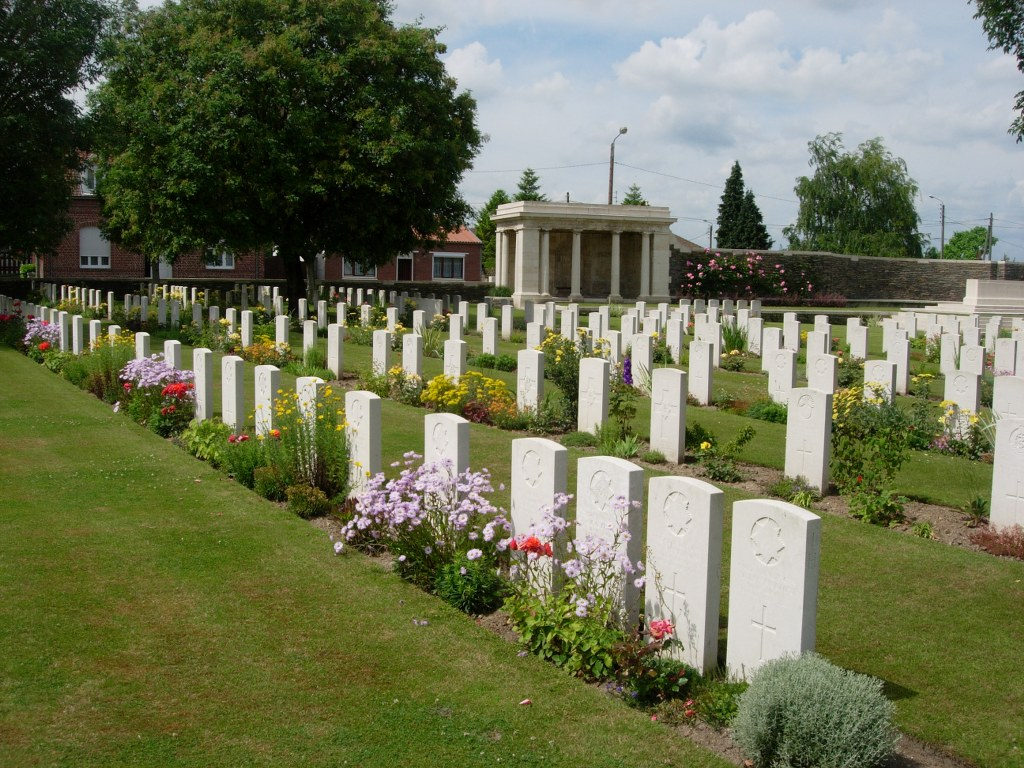
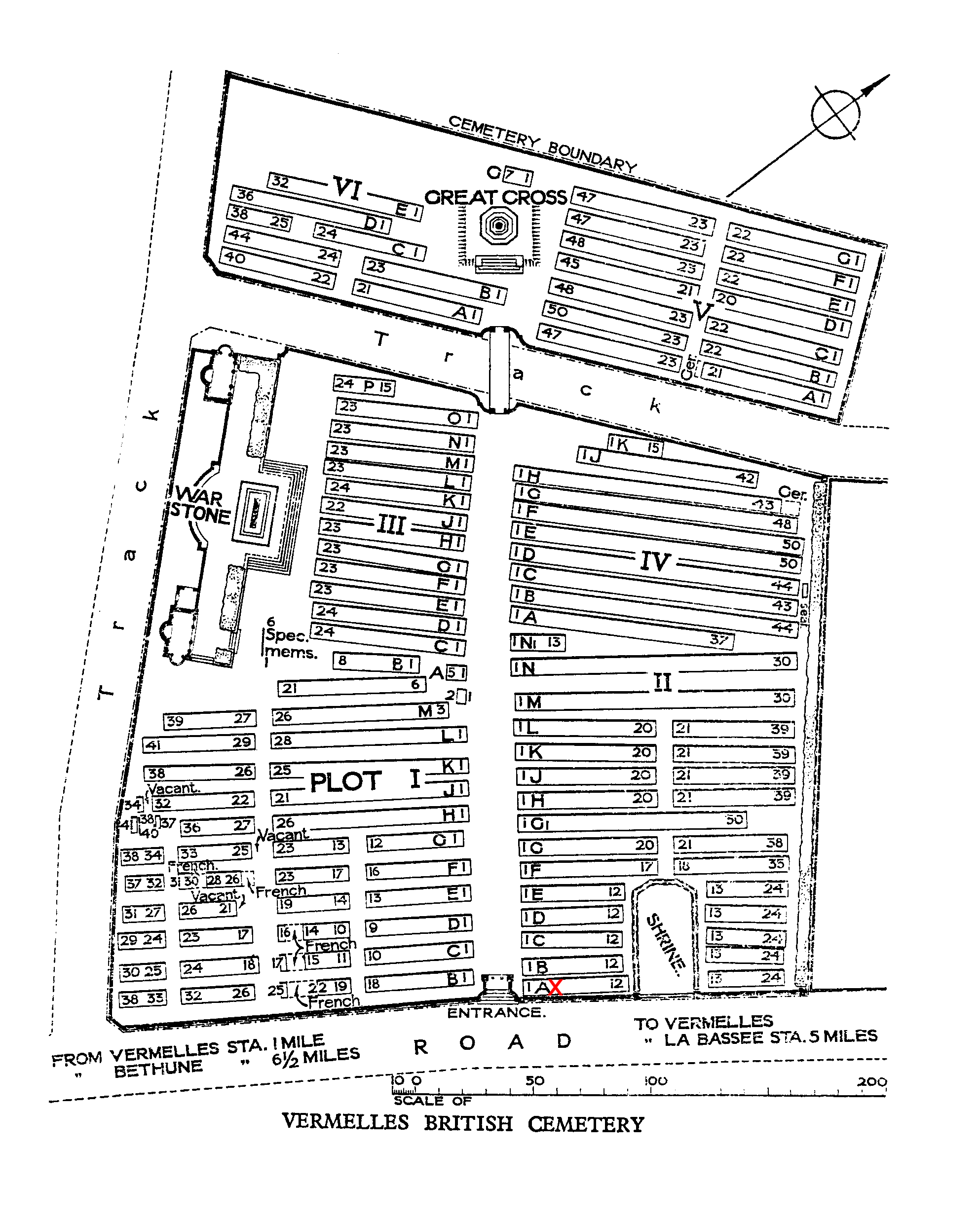
Edward John Veal is buried, in grave II. A. 4, within Vermelles British Cemetery, Vermelles, France.


Vermelles was in German hands from the middle of October 1914 to the beginning of December 1914, when it was recaptured by the French. The cemetery, designed by Sir Herbert
 Baker, was begun in August 1915 (though a few graves are slightly earlier), and during the Battle of Loos, when the Chateau was used as a dressing station, Plot I was completed.  It
was laid out and fenced by the Pioneers of the 1st Gloucesters, and known for a long time as "Gloucester Graveyard".  From April 1917, to the Armistice, the cemetery was closed; but
after the Armistice some graves were re-grouped and others were brought in from the battlefields to the East.

There are now over 2134 First World War casualties commemorated in this cemetery.  Of these, 198 are unidentified and special memorials are erected to six soldiers from the United
Kingdom, known to be buried among them.


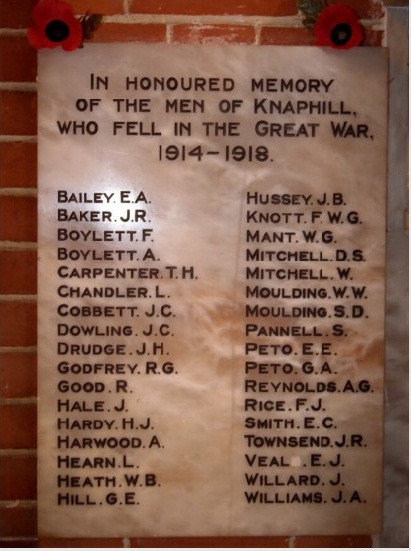
Edward John Veal is also commemorated on the memorial tablet within Knaphill Holy Trinity Church.