Ernest Yorke Stephenson

Home page

Appears as:

Born:

Parents:

Unit:

No.:

Rank:

Died:

Grave/Memorial: 
Stephenson, Ernest Y

1899, Peckham, London

Ernest and Louise (née Hickin)

10th Battalion, The Lincolnshire Regiment

43915

Private

18 April 1918, 64th Casualty Clearing Station, Proven, Belgium, age 19

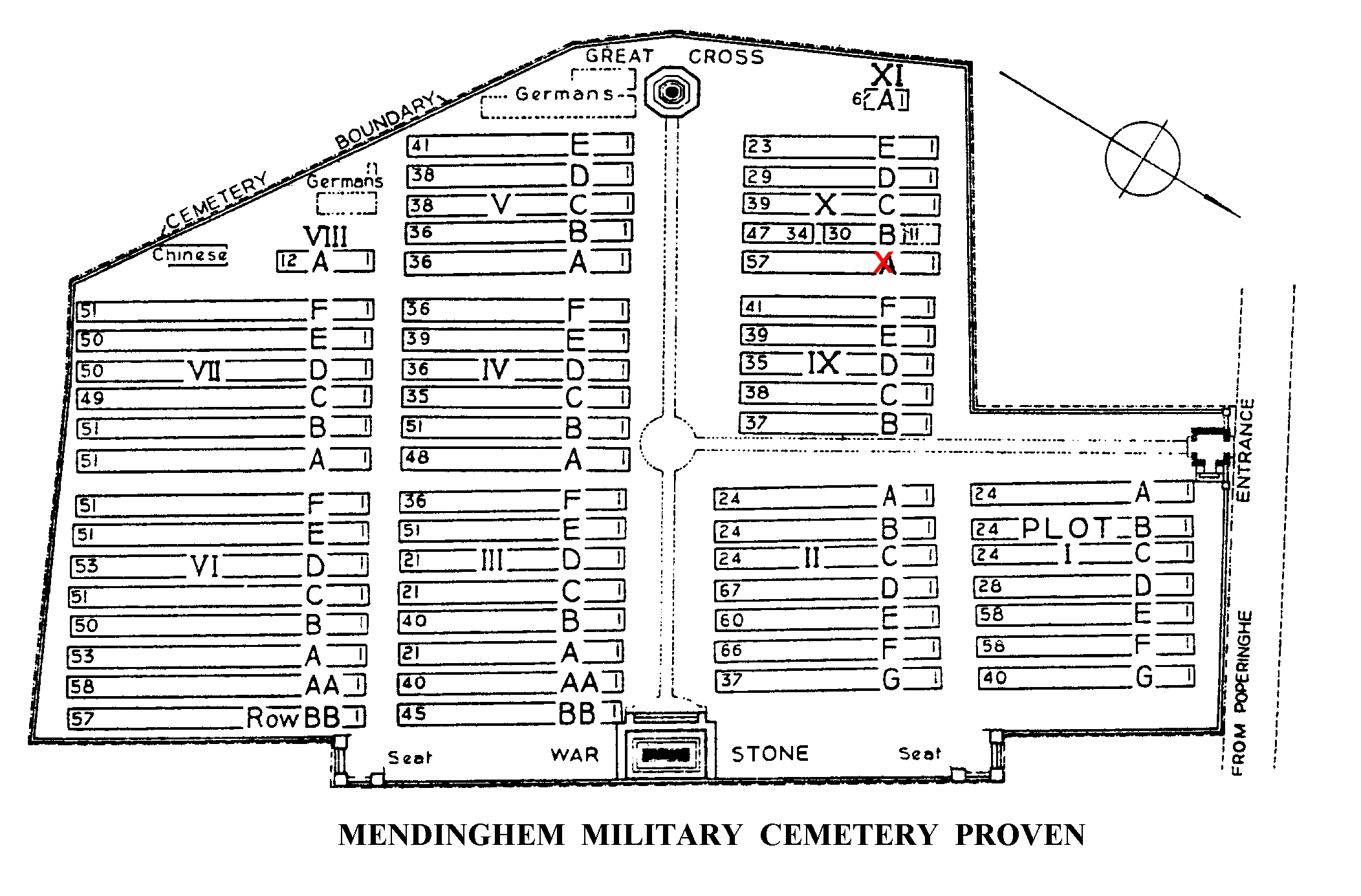
Mendinghem Military Cemetery, Proven, Arrondissement Ieper, West Flanders,
Belgium: X. A. 16

      

Biography:
Ernest Yorke Stephenson was born, in Peckham, London, in 1899. He was the son and eldest child of Ernest Shelton, a saw mill owner, and Louise Maud
(née Hickin).

Ernest’s family moved to Woking in 1912, residing in a new house, The Laurels, in Smarts Heath. Ernest attended Guildford Grammar School.

Ernest deployed to France in February 1918, with 10th Battalion, The Lincolnshire Regiment.

Ernest Yorke Stephenson was wounded by shrapnel in the side and arm, on 18 April 1918, and died the same day at 64th Casualty Clearing Station,
Proven, Belgium.

The Casualty Clearing Station was part of the casualty evacuation chain, further back from the front line than the Aid Posts and Field Ambulances. It was manned by troops of the Royal
Army Medical Corps, with attached Royal Engineers and men of the Army Service Corps. The job of the CCS was to treat a man sufficiently for his return to duty or, in most cases, to
enable him to be evacuated to a Base Hospital.

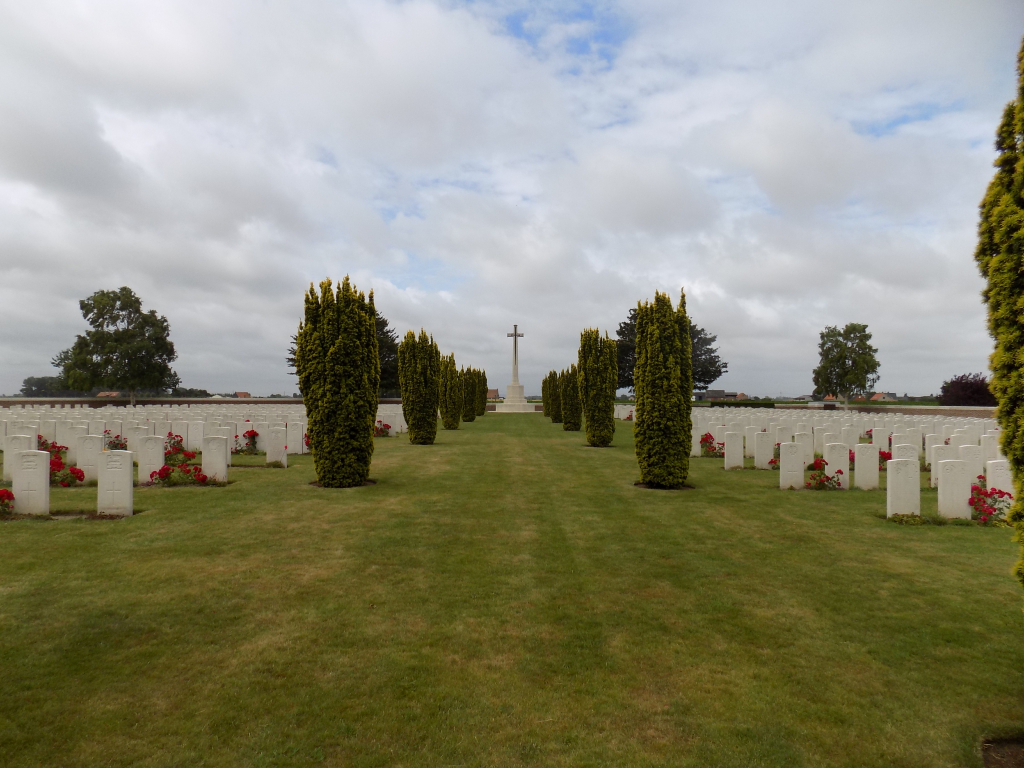
Ernest is buried, in grave X. A. 16, within Mendinghem Military Cemetery, Proven, Arrondissement Ieper, Belgium.


Mendinghem (like Dozinghem and Bandaghem) was the popular name given by the troops to groups of casualty clearing stations posted to this area during the First World War.

In July 1916, the 46th (1st/1st Wessex) Casualty Clearing Station was opened at Proven and this site was chosen for its cemetery. The first burials took place in August 1916. In July
1917, four further clearing stations arrived at Proven in readiness for the forthcoming Allied offensive on this front and three of them, the 46th, 12th and 64th, stayed until 1918. From
May to July 1918, while the German offensive was at its height, field ambulances were posted at Proven. The cemetery was closed (except for one later burial) in September 1918.

There are now 2,391 Commonwealth burials of the First World War in this cemetery and 52 German war graves.

The cemetery was designed by Sir Reginald Blomfield.