John Rookley

Home page

Appears as:

Born:

Parents:

Unit:


No.:

Rank:

Died:

Grave/Memorial: 
Rookley, John

4 April 1881, Halberton, Devon

John and Ann (née Bowerman)

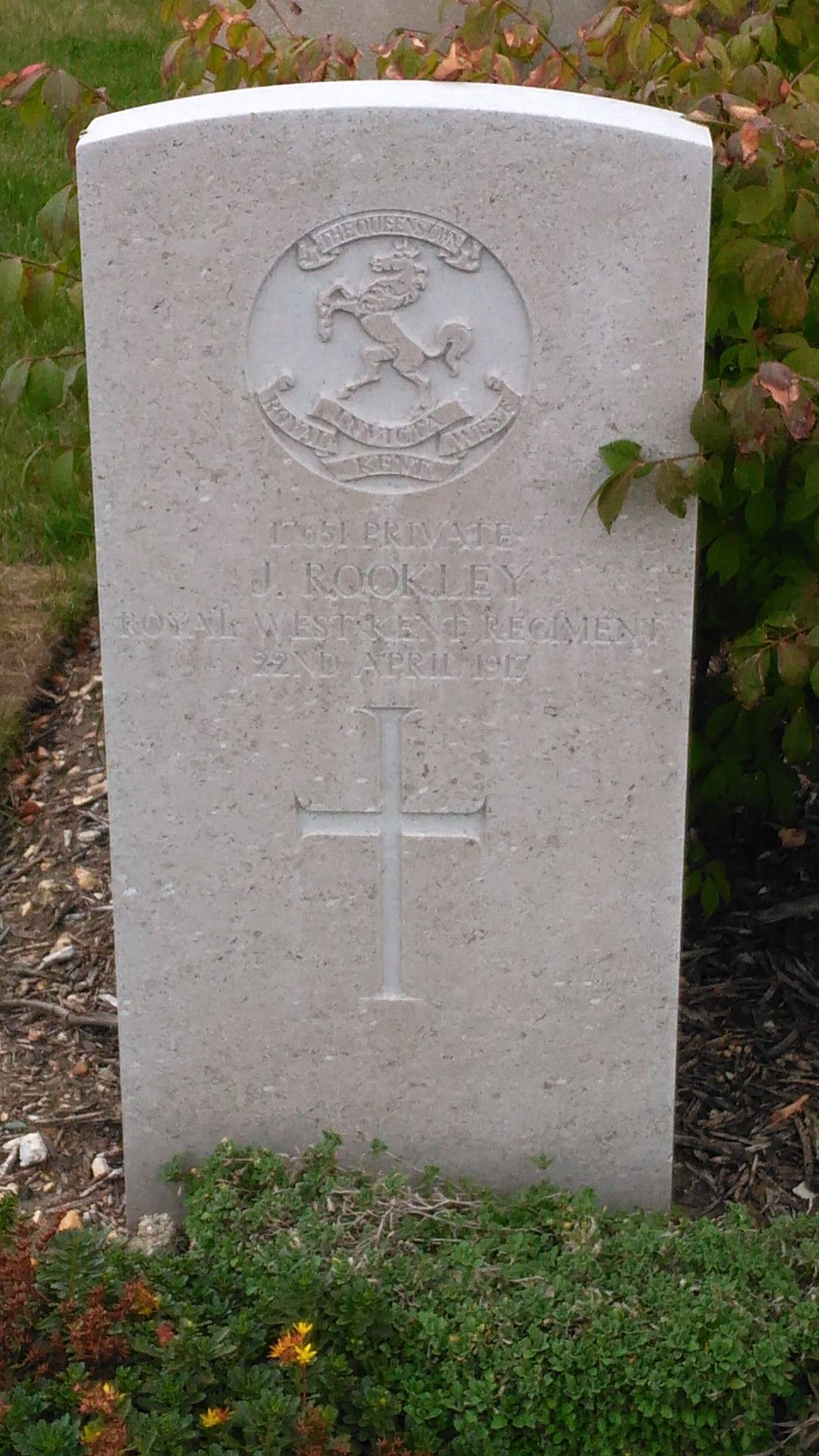
The Queen’s (Royal West Surrey) Regiment / 6th Battalion, Royal West
Kent Regiment

G.13830, G.17651

Private

21 April 1917, No. 9 General Hospital, France, age 36

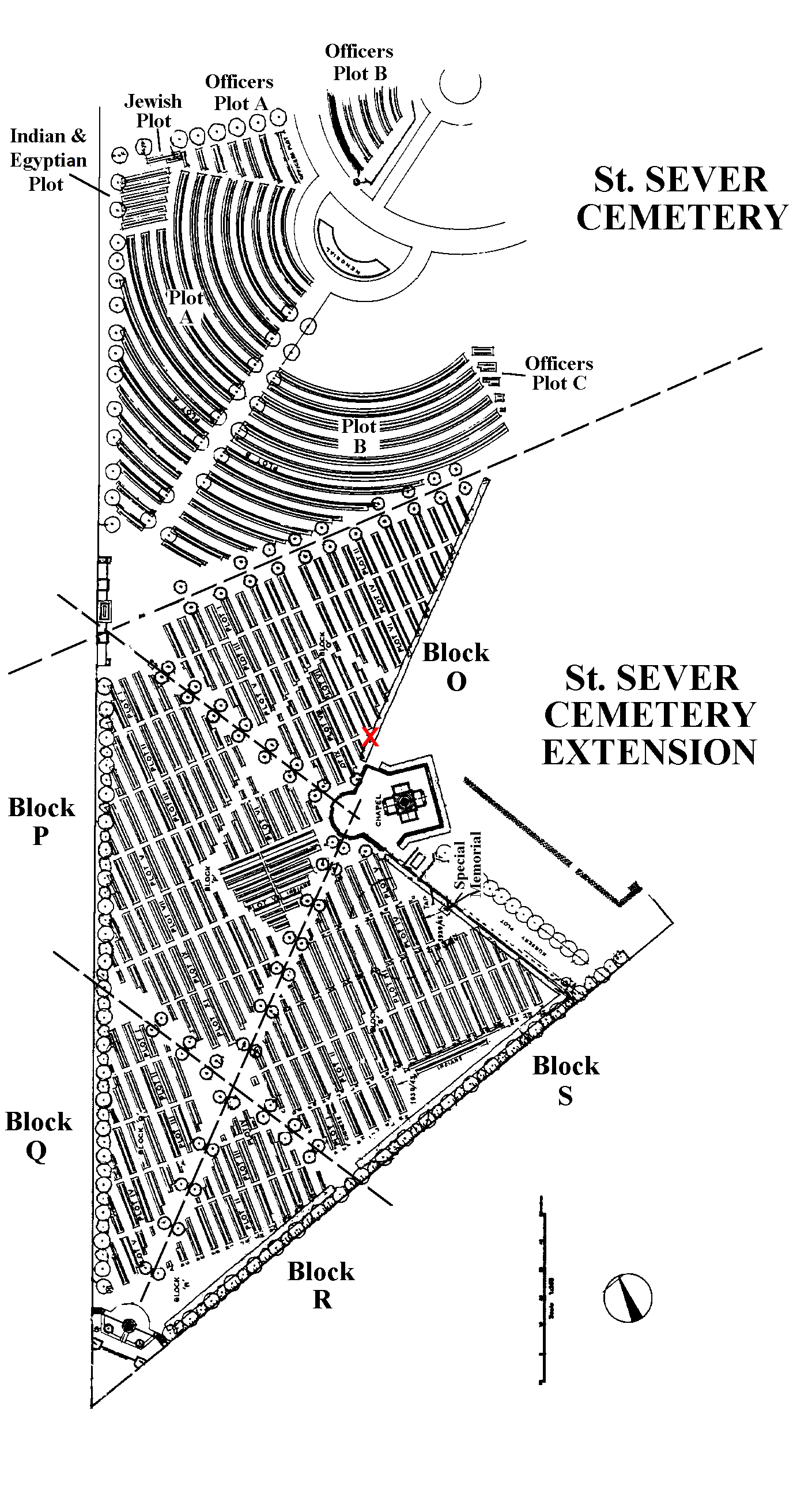
St. Sever Cemetery Extension, Rouen, France: O. IX. E. 1
      

Biography:
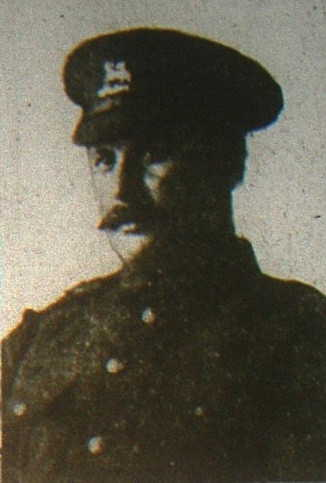
John Rookley was born in Halberton, Devon, on 4 April 1881. He was the son and fifth child of John, an agricultural labourer, and Ann (née Bowerman).
He had five sisters.

After leaving school, John worked as a domestic gardener. In 1901 he was lodging with his brother-in-law in Worth, Sussex. By 1904, John had moved to
Woking and was renting a room in St John’s.

On 3 November 1909, John married Mary Ann Hizzey. They had a daughter.

John Rookley was conscripted in 1915, aged 34. He joined The Queen’s (Royal West Surrey) Regiment on 11 November and was assigned to the Army
Reserve. He stood 5 feet 6½ inches tall and weighed 154 pounds. His complexion was described as ‘fresh’; he had brown hair and brown eyes.

John was mobilized on 3 June 1916 and posted to 12th Battalion The Queen’s (Royal West Surrey) Regiment. On 12 September he was transferred and
posted to the 7th (Reserve) Battalion. On 7 October he was transferred to The Royal West Kent Regiment and, on 24 October, posted to 6th Battalion.
.
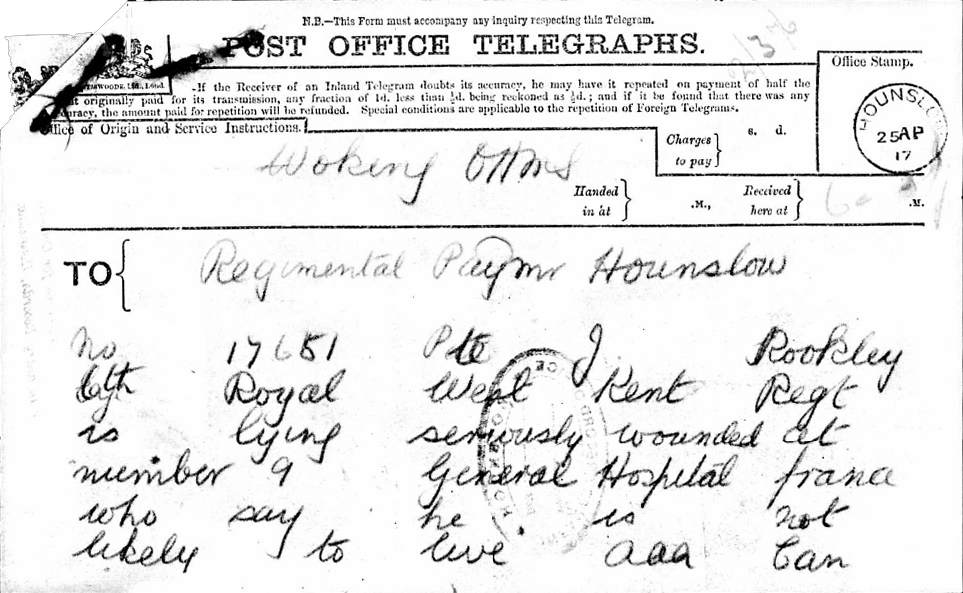
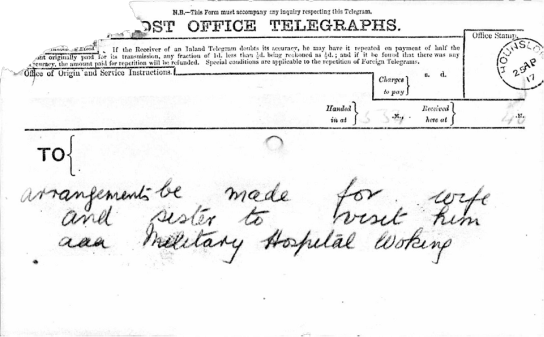
John Rookley was wounded, with a gunshot wound to the thigh, on 9th
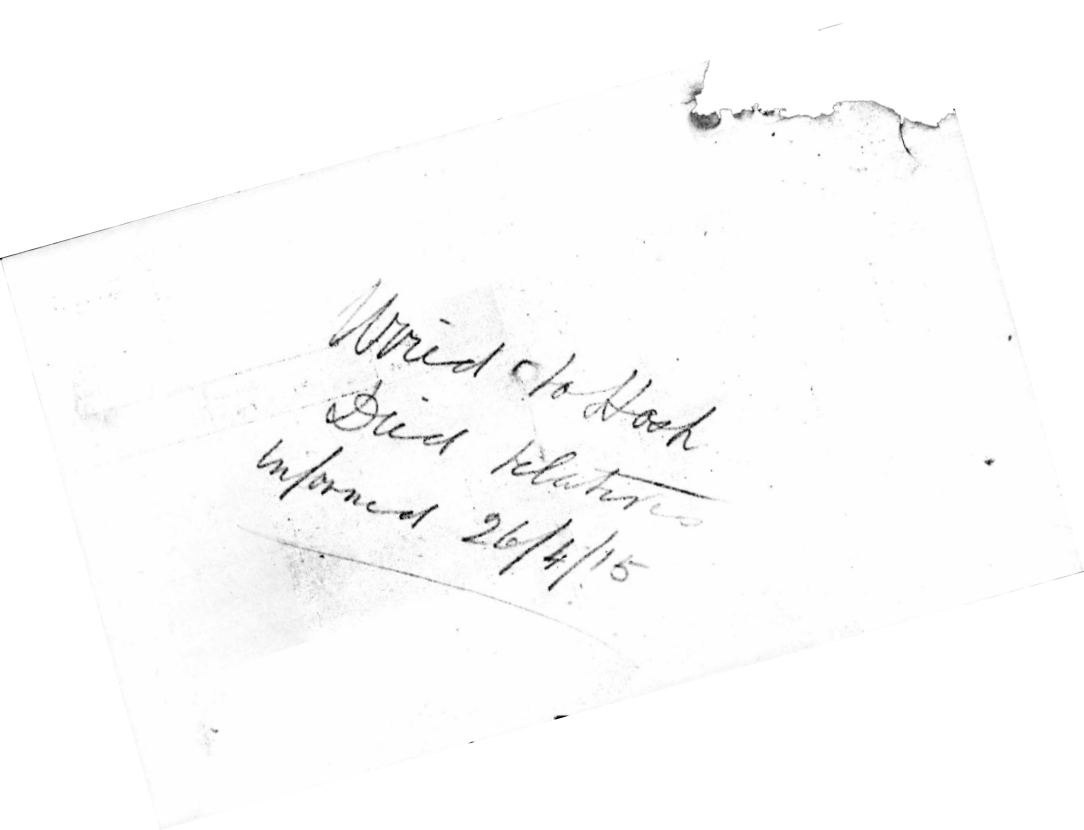
April 1917. Attempts were made to bring him home and for his family
to visit but he died on 21 April.

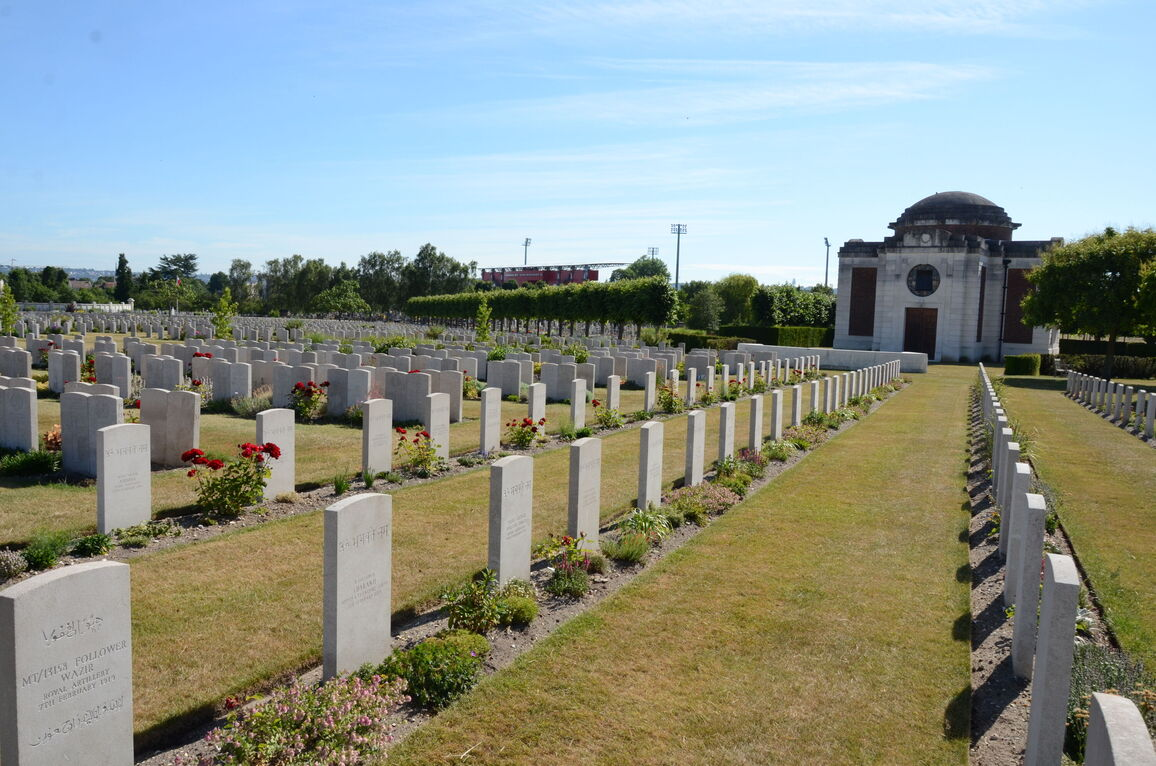
He is buried, in grave O. IX. E. 1, within the St. Sever Cemetery
Extension, Rouen, France


During the First World War, Commonwealth camps and hospitals were stationed on the southern outskirts of Rouen. A base supply depot and the 3rd Echelon of General Headquarters
were also established in the city.

Almost all of the hospitals at Rouen remained there for practically the whole of the war. They included eight general, five stationary, one British Red Cross and one labour hospital, and
No. 2 Convalescent Depot. The great majority of the dead from these hospitals were taken to the city cemetery of St. Sever. In September 1916, it was found necessary to begin an
extension, where the last burial took place in April 1920.