John Alfred Knight

Home page

Appears as:

Born:

Parents:

Unit:

No.:

Rank:

Died:

Grave/Memorial: 
Knight, John A

10 February 1882, Kingston upon Thames, Surrey

John and Emma (née Beckingham)

Royal Navy (H.M.S. Queen Mary)

307399

Petty Officer Stoker

31 May 1916, age 34

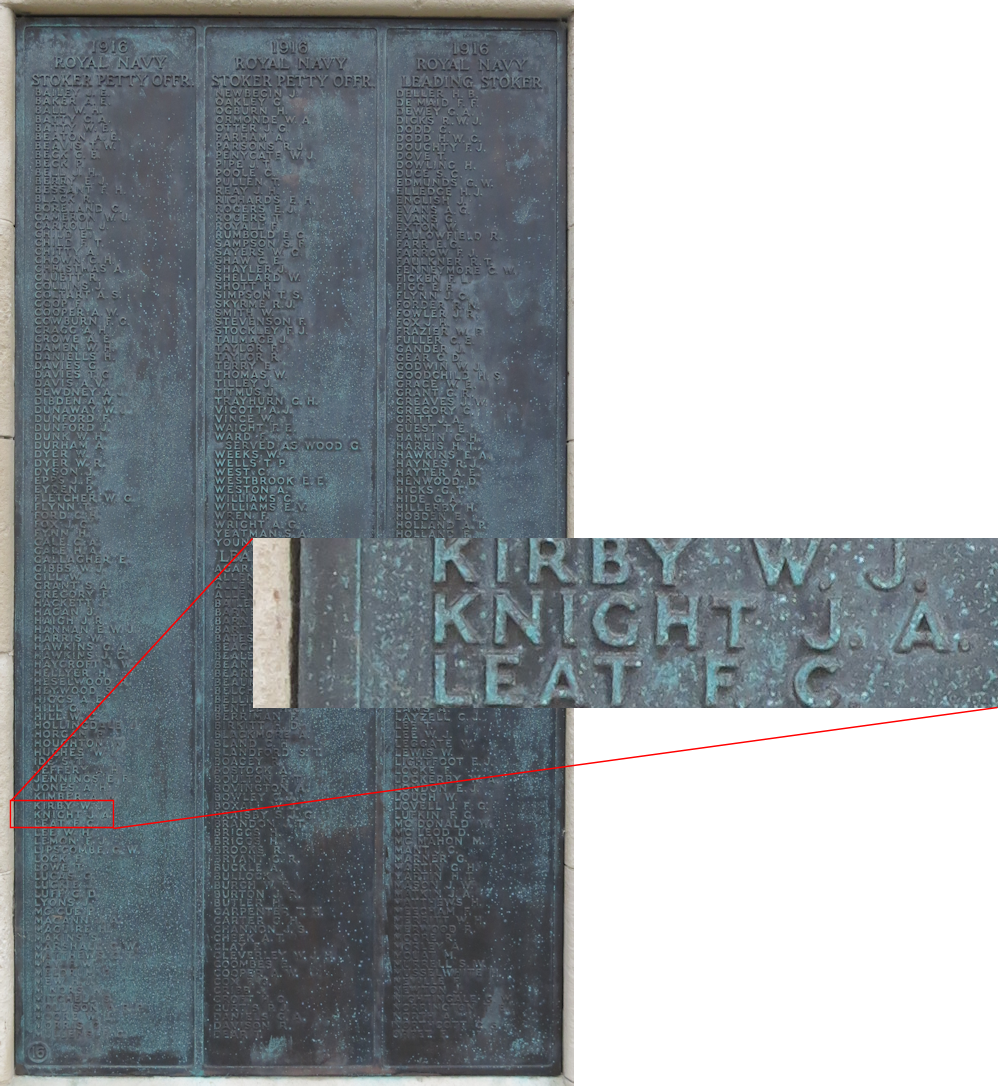
Body not recovered for burial. Recorded on Portsmouth Naval
Memorial: Panel 16
   

Biography:
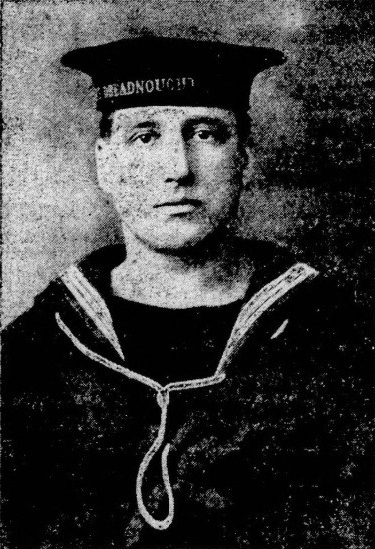
John Alfred Knight was born, in Kingston upon Thames, Surrey, on 10 February 1882. He was the son of John, a tailor, and
Emma (née Beckingham). He had a brother and two sisters.

John’s mother died in 1889, when he was 17. His father remarried the following year and he gained six step siblings. His father and
step-mother then had two daughters.

After leaving school, John had been working as a carpenter’s assistant when he joined the Royal Navy in September 1904, when
he was 22. He stood 5 feet 6¼ inches tall, had a ‘fresh, complexion, brown hair and blue eyes. He was engaged as a stoker 2nd
class. He was promoted to Stoker 1st Class on 1 July 1907.

On 1 July 1913, John was promoted to acting Leading Stoker, being substantiated in February 1914. He joined H.M.S. Queen
Mary in April 1914 and was promoted to Stoker Petty Officer in March 1916.

John Alfred Knight was killed on 31 May 1916 when H.M.S. Queen Mary, on which he was serving, was sunk during the Battle
of Jutland. He is commemorated on the Portsmouth Naval Memorial; his name appears on panel 16.


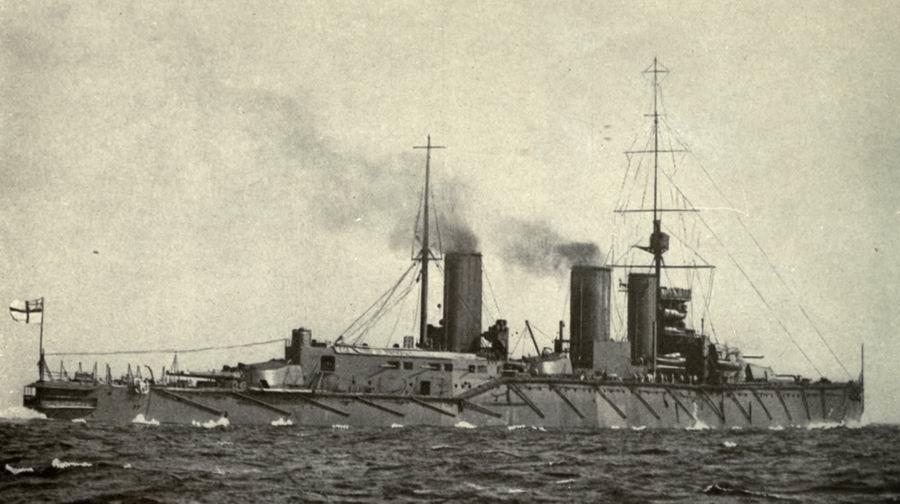
H.M.S. Queen Mary was the last battlecruiser built by the Royal Navy before the First World War. The sole member of her class, Queen Mary shared many
features with the Lion-class battlecruisers, including her eight 13.5-inch (343 mm) guns. She was completed in 1913 and participated in the Battle of
Heligoland Bight as part of the Grand Fleet in 1914. Like most of the modern British battlecruisers, the ship never left the North Sea during the war. As part
of the 1st Battlecruiser Squadron, Queen Mary attempted to intercept a German force that bombarded the North Sea coast of England in December 1914,
but was unsuccessful. The ship participated in the largest fleet action of the war, the Battle of Jutland in mid-1916. She was hit twice by the German
battlecruiser Derfflinger during the early part of the battle and her magazines exploded shortly afterwards, sinking her with the loss of more than 98 percent of
the ship’s complement.