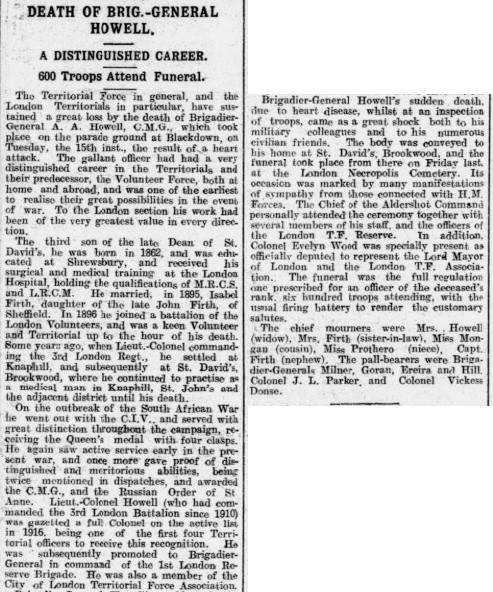
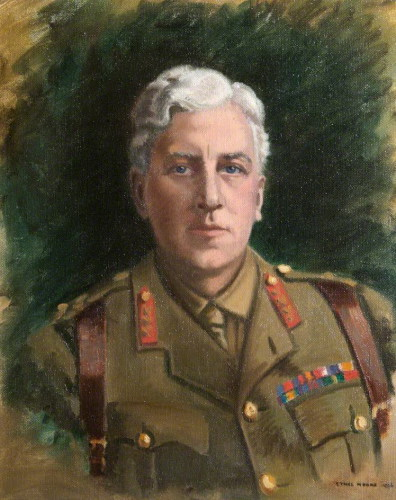
Brigadier Arthur Anthony Howell C.M.G., T.D.
Home page| Appears as: Born: Parents: Unit: No.: Rank: Died: Grave/Memorial: |
Howell, Arthur A
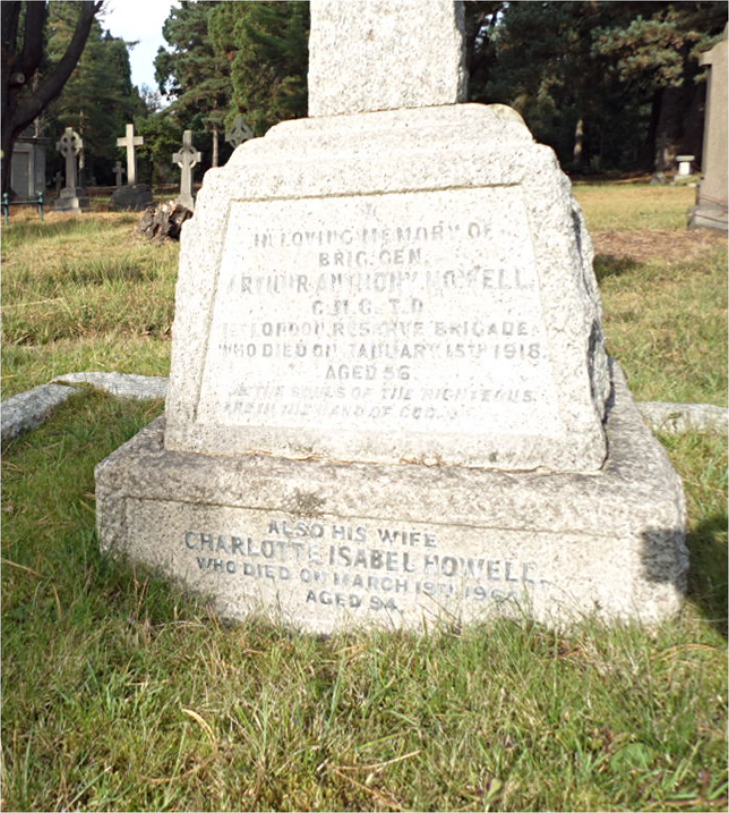
6 December 1860, Swansea, Wales David and Ann (née Powell) General Staff, Commanding 1st London Reserve Brigade N/A Brigadier 15 January 1918, Blackdown Barracks, Deepcut, Surrey Brookwood Cemetery, Woking, Surrey: G.180429 |
![]() |


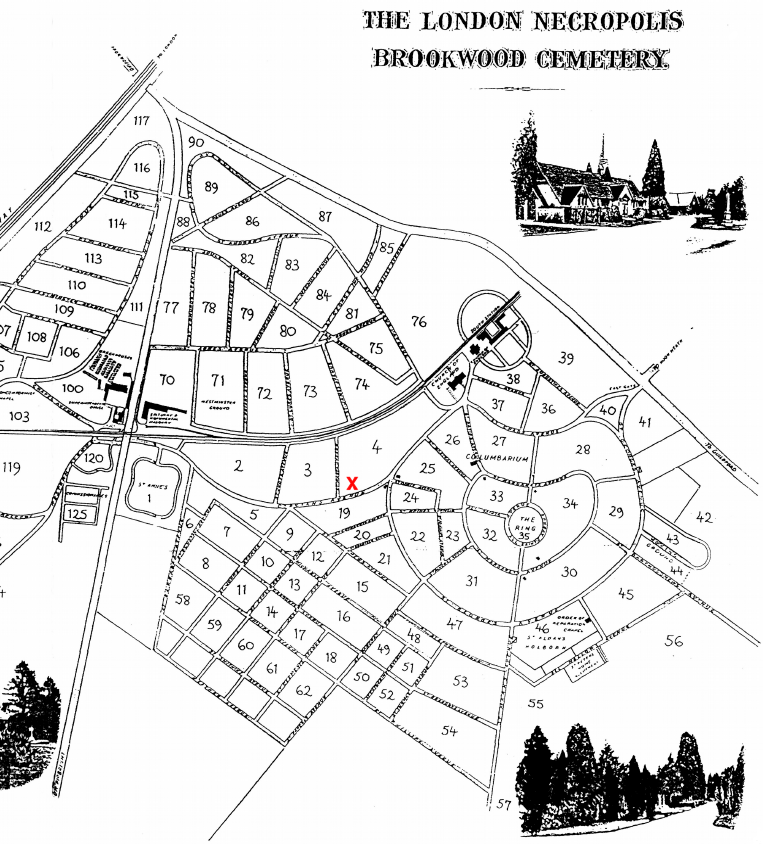
| Brookwood Cemetery was conceived by the London Necropolis Company (LNC) in 1849 to house London’s deceased, at a time when the capital was finding it difficult to accommodate its increasing population, of living and dead. In 1852, an Act of Parliament was passed which allowed them to purchase 2268 acres of heathland near Woking from Lord Onslow for the purpose of providing a cemetery. Work began immediately on an area of 350 acres at Brookwood on the western extremity of the parish. There was no settlement at that time in the area, and it was not until the 1880s that the village of Brookwood was developed. At the time of establishment, the cemetery was divided by paths and avenues into separate 'grounds' some of which were allotted to different London parishes, and to various religious denominations, as it catered for all classes and faiths. The southern half of the cemetery, known initially as Woking Necropolis, was consecrated on 7 November 1854 by Charles Sumner, Bishop of Winchester and opened to the public on 13 November 1854 when the first burials took place. Brookwood was originally accessible by rail from a dedicated station – The London Necropolis Railway Station – next to Waterloo station in Central London. Trains, with passenger carriages reserved for the different classes and Hearse Carriages for the coffins (also for different classes) came into the cemetery on its dedicated branch line from the adjoining South Western Main Line – a junction just to the west of Brookwood station. |
![]() |