Christopher Charles Gray

Home page

Appears as:

Born:

Parents:

Unit:

No.:

Rank:

Died:

Grave/Memorial: 
Gray, Christopher C

17 December 1881, Knaphill

Emily (née Gray) [BB]

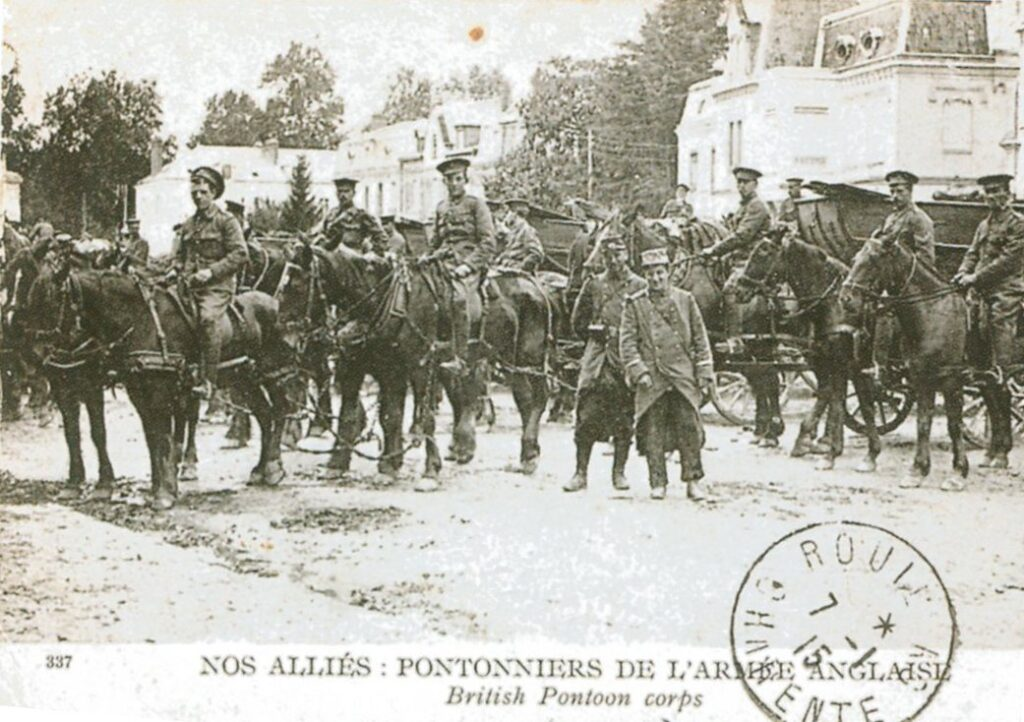
"C" Coy 7th Horse Pontoon Park, Royal Engineers

92056

Driver

26 September 1918, age 36

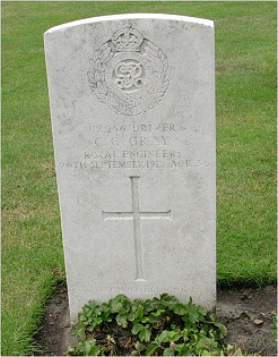
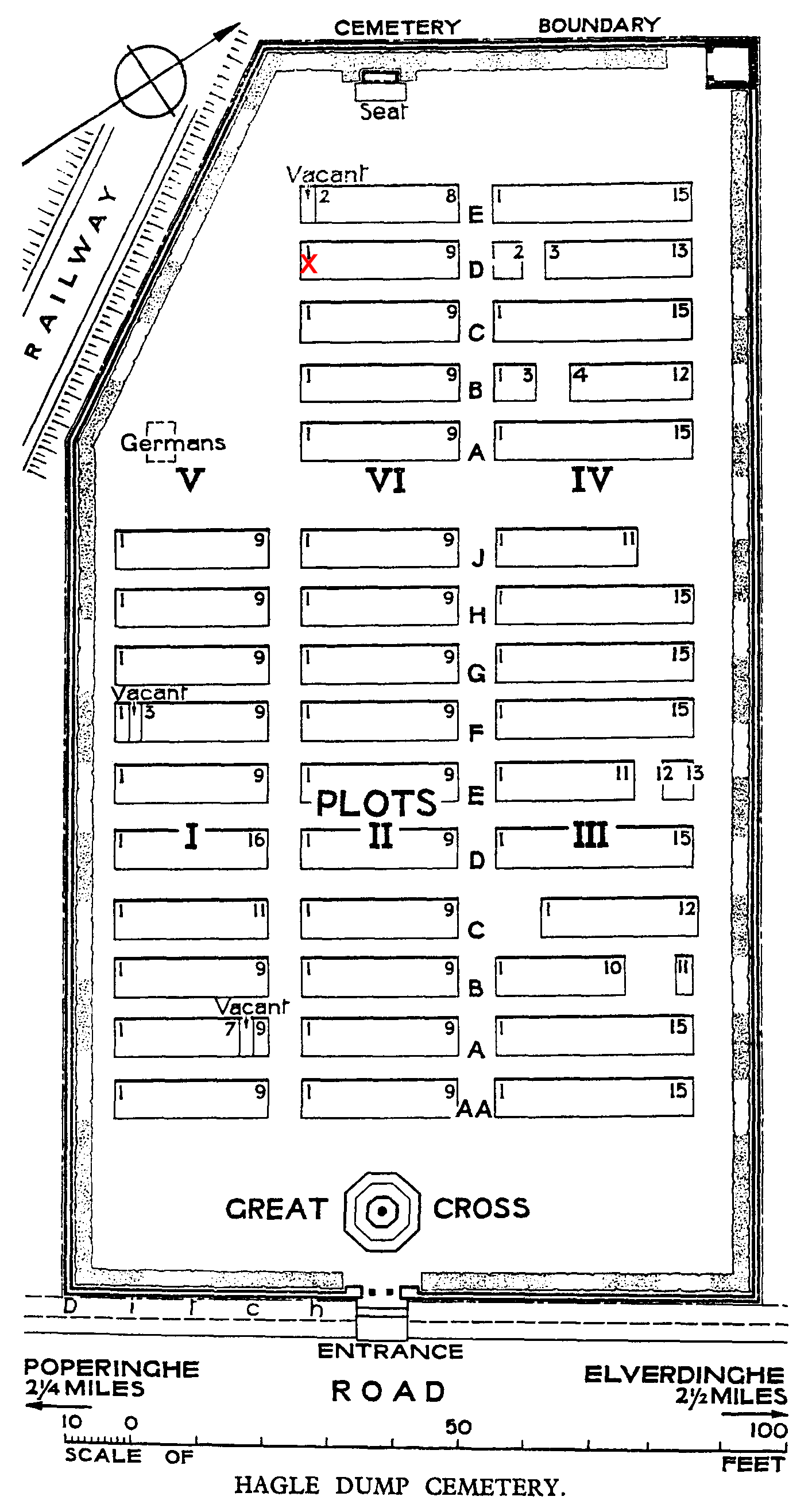
Hagle Dump Cemetery, Elverdinge, Arrondissement Ieper,
West Flanders, Belgium: VI. D. 1
   

Biography:
Christopher Charles Gray was born in Knaphill, Woking on 17 December 1881, the illegitimate son of Emily Gray. At the time of the 1881 census (around the time of Christopher’s conception), Emily was working as a kitchen-maid in the house of Ralph Vivian in Hanover Square, Westminster. It is possible the unmarried 35 year old Ralph was the father; other candidates would be the footman, James Gildey, or the butler, Joseph Folan. Five years later, Emily married William People, in May 1886, and they had two sons and three daughters together. Christopher attended Westfield School. After leaving school, he worked for Jackson’s Nursery as a carter.
Christopher joined the Royal Engineers in August 1915. He was a driver with "C" Company, 7th (Horsed) Pontoon Park. He would have driven a horse-drawn waggon. Pontoon Parks were principally involved in the construction and repair of bridges.

Christopher was killed on 26 September 1918 near Elverdinge, Belgium. He is buried in grave VI. D. 1 in Hagle Dump Cemetery.


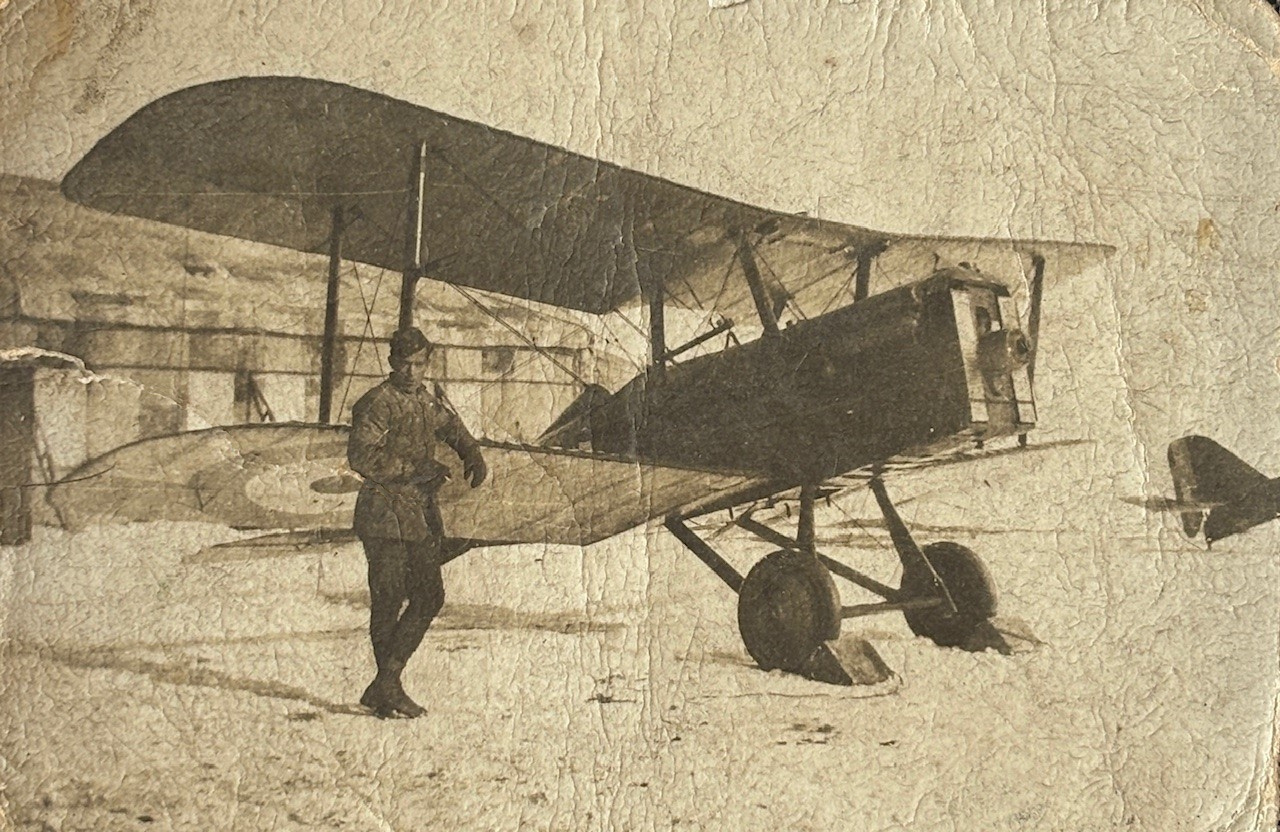
Christopher posing by a plane (which might be an Airco DH.4) – it has no propeller and the front cowling appears to have been removed.
The DH.4 was introduced to the Royal Flying Corps in March 1917


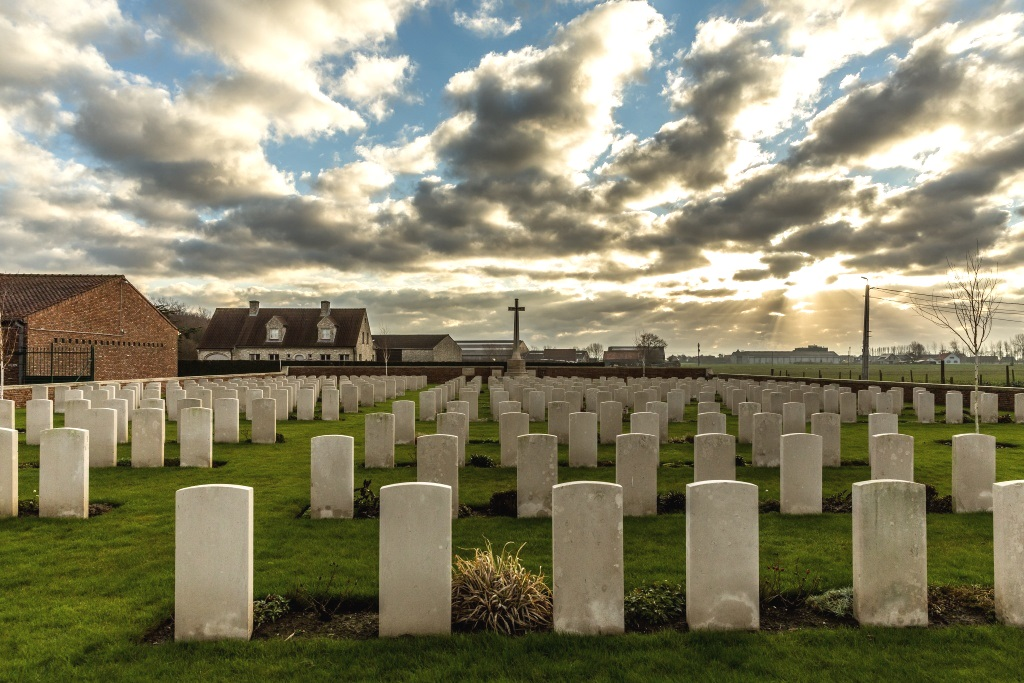
Hagle Dump Cemetery, was begun in April 1918, during the Battles of Lys and named after a
nearby stores dump. It was designed by Sir Reginald Blomfield.

The cemetery was used by fighting units and field ambulances until the October and was enlarged
after the Armistice when more than 200 graves were brought into Plots III and IV from the
battlefields of the Ypres Salient and the Brielen Military Cemetery.

Hagle Dump Cemetery contains 437 Commonwealth burials of the First World War, 139 of which
are unidentified.