Robert Henry Copas

Home page

Appears as:

Born:

Parents:

Unit:

No.:

Rank:

Died:

Grave/Memorial: 
Copas, Robert H

1891, Chobham

Robert and Esther (née Saunders)

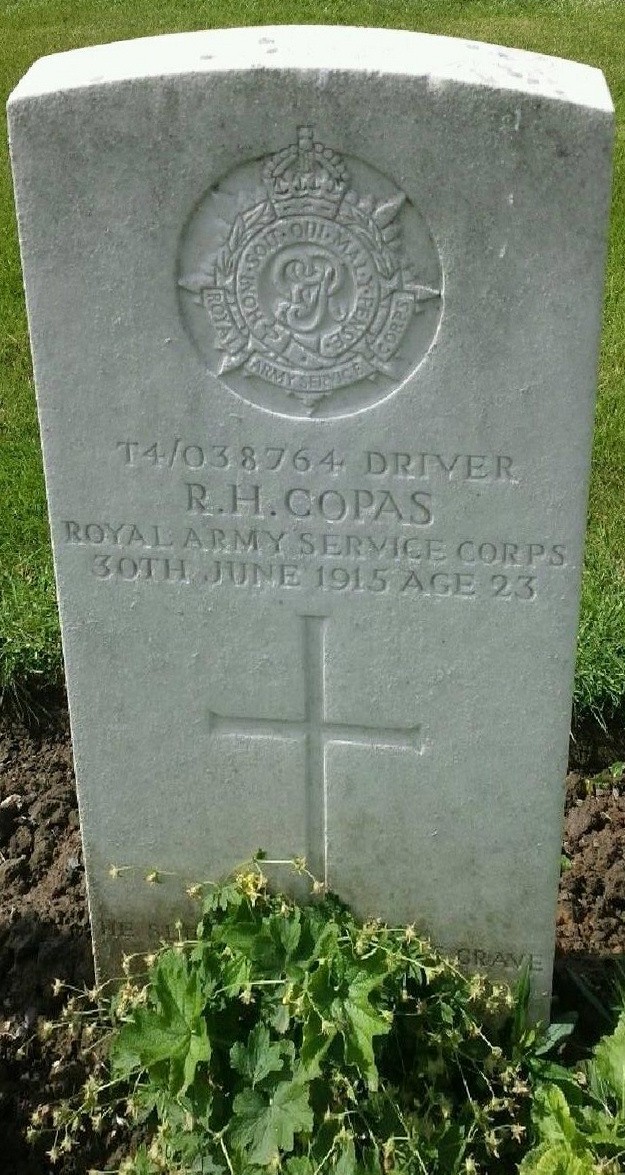
96th H.T. Company, Army Service Corps

T4.038764

Driver

30 June 1915

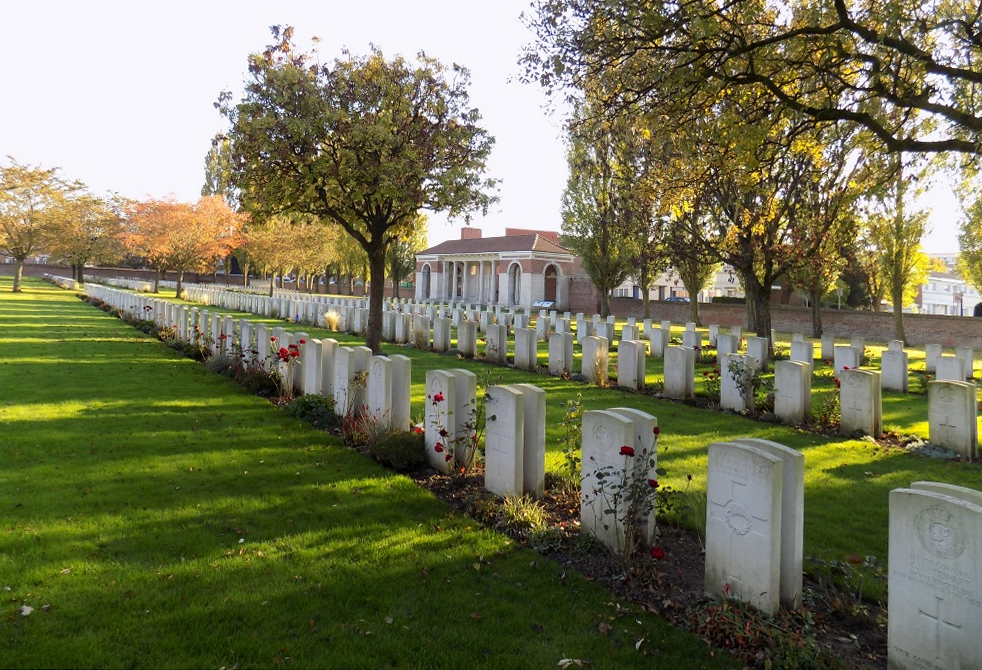
Cité Bonjean Military Cemetery, Armentieres,
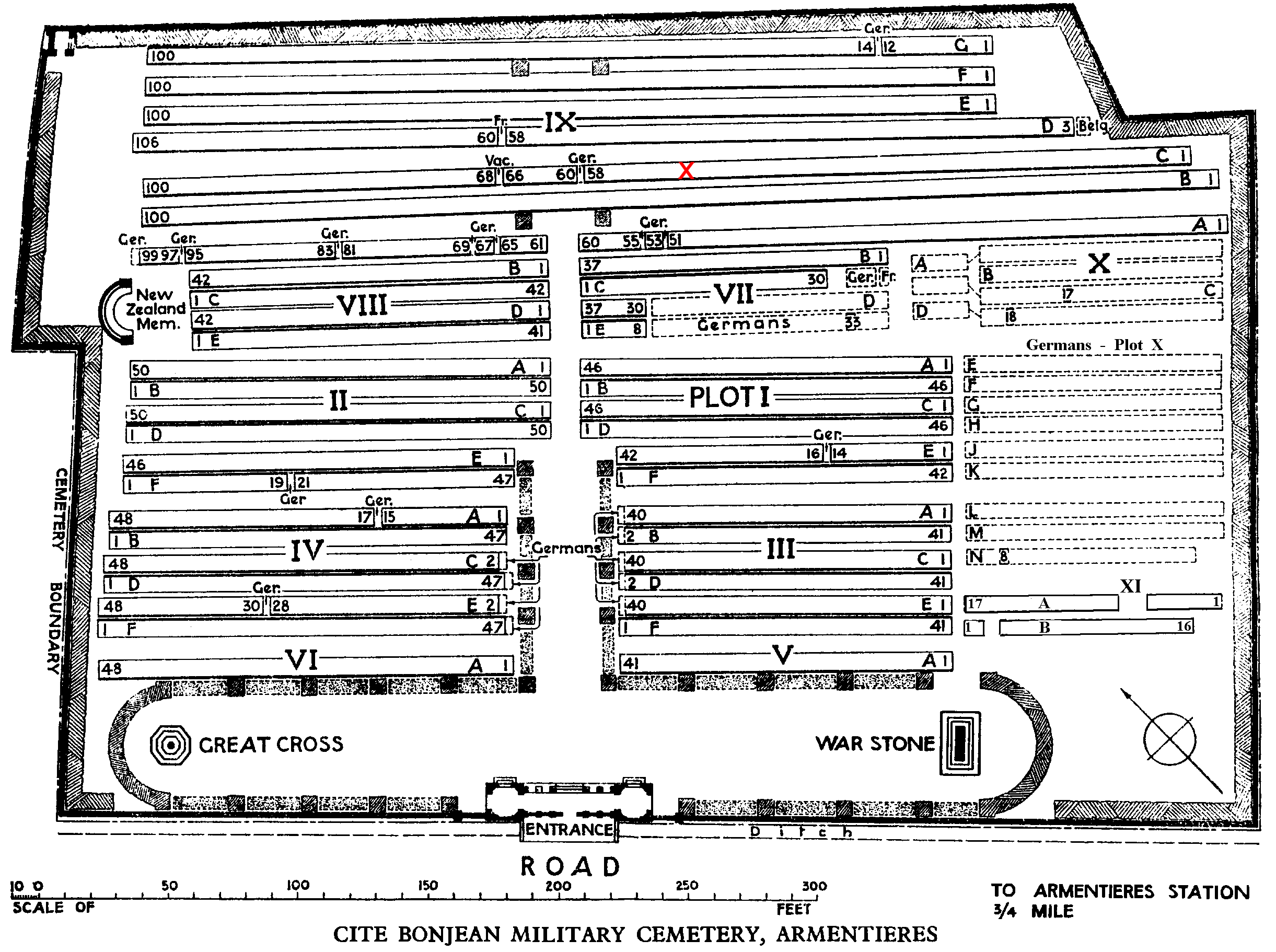
Nord-Pas-de-Calais, France: IX. C. 49

 
Biography:
Robert Henry Copas was born in Chobham in 1891, the son of Robert, an agricultural labourer, and Esther (née Saunders). He had a sister. His father died in 1896 and his mother remarried, in 1902, to her cousin, Edward John Howard.

On leaving school, Robert worked as a gardener, employed by Mr Marzetti of Kettlewell Hill.

Robert enlisted in the Army on 14 September 1914, becoming a driver embodied in the Survey Brigade Company, Army Service Corps (ASC) Territorial Force. He stood 5 feet 8 inches tall and weighed 133 pounds. His complexion was described as ‘sallow’; he had blue eyes and fair hair.

Robert was deployed to France on 21 December. Robert was attached to the 27th Divisional Train when he was killed by an exploding shell on 30 June 1915.
The Train provided horse-drawn transport for the formation known as a Division. It usually comprised a small Train Headquarters, one Headquarters
Company, three other Horse Transport Companies and a contingent of other troops (known as Army Troops), all of the Army Service Corps. When
moving and laid out in officially-approved organisation, the Train would occupy 1755 yards of road (1605 metres).

Robert Henry Copas is buried in grave IX. C. 49 within Cité Bonjean Military Cemetery, Armentieres, France.


Armentieres was occupied by the 4th Division on 17 October 1914 and it remained within the Allied
lines until its evacuation ahead of the German advance on 10 April 1918, after a prolonged and heavy
bombardment with gas shell. It was occupied by the Germans next day, and was not recovered until 3
October 1918.

Cité Bonjean Military Cemetery was begun (Plot IX) in October 1914 and during the winter of 1914-
15 it was used for civilian burials (later removed). The cemetery continued to be used until April 1918.
Plots V, VI, VII and X were then used by the Germans.

The cemetery now contains 2,132 Commonwealth burials of the First World War. The cemetery and
memorial were designed by Sir Herbert Baker.