Ernest Arthur Bailey

Home page
Appears as:

Born:

Parents:

Unit:

No.:

Rank:

Died:

Grave/Memorial: 
Bailey, Ernest A

1884, Knaphill, Woking, Surrey

George & Mary Anne (née Boughton)

Royal Garrison Artillery / 2nd Battalion York and Lancaster Regiment

5024 / 20416

Private

10 October 1915, Belgium

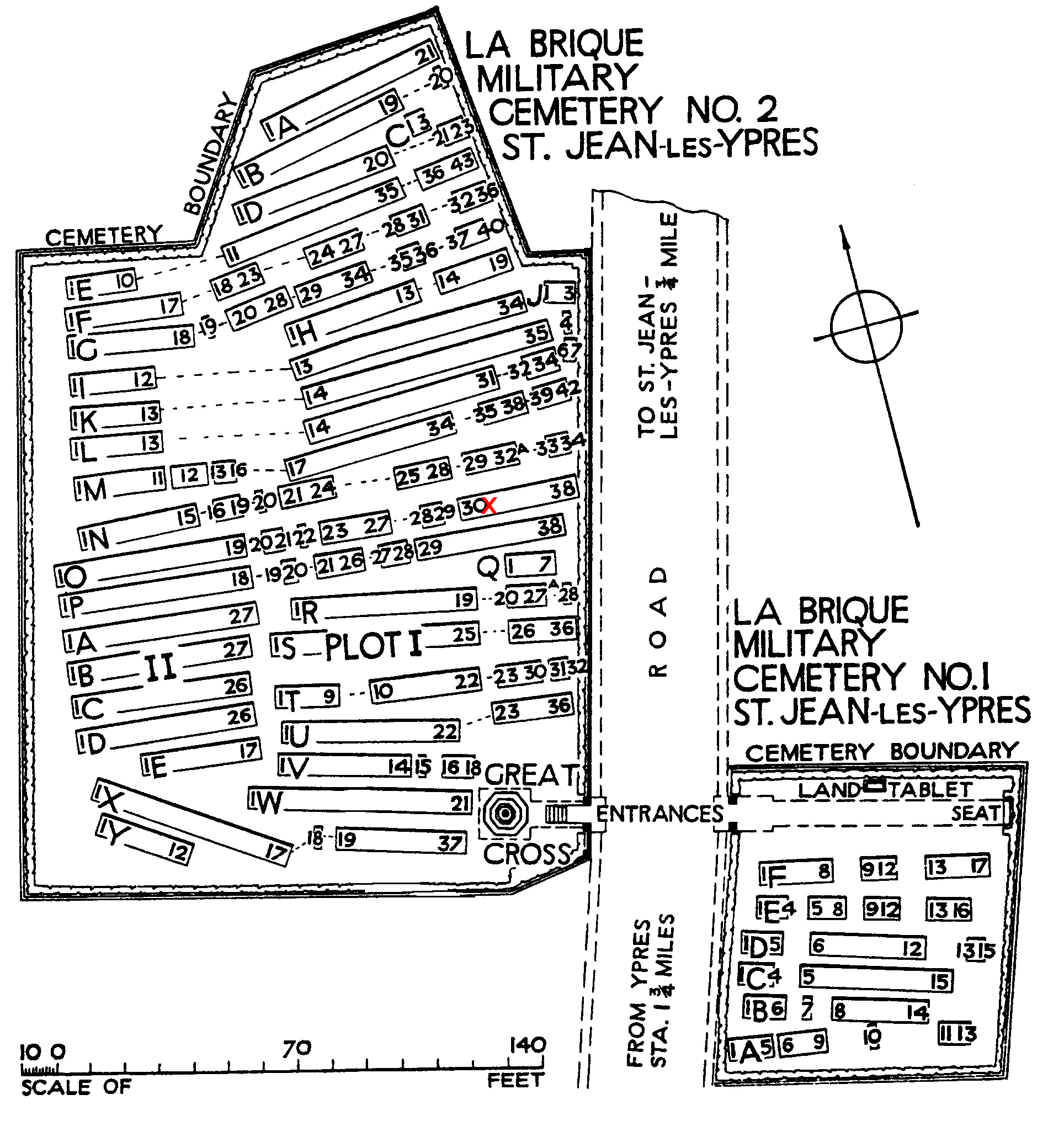
La Brique Military Cemetery No. 2: I. O. 38.

 

Biography:
Ernest Arthur Bailey was born in Knaphill, Woking in 1884 to George Bailey, plumber, and his wife Mary Ann (née Boughton).
He was baptised in St John the Baptist church on 22nd June 1884.

Ernest was the second of six children. He became an attendant at the County Asylum (Brookwood Hospital).

On 16th November 1910, Ernest married Louisa Webb at Bisley, Surrey. They had two children, George and Annie.
Ernest enlisted on 16 November 1914 and was assigned to the Royal Garrison Artillery. He stood 5 feet 11½ inches tall and
weighed 140 pounds.

In June 1915 Ernest was transferred to the 2nd Battalion York and Lancaster Regiment. He was posted to France on 18 August 1915.

Ernest was killed on October 10, 1915. On that day, the British began an attack at La Bassée, a small village in the French
province of Artois, near the Belgian border. This attack was part of the broader First Battle of Flanders, which also involved
the Battle of Armentières and the Battles of Ypres. The offensive was a small-scale action supporting the main French offensive in Artois.
While the initial gains were promising, a German counterattack stalled further progress, resulting in high casualties for both sides.

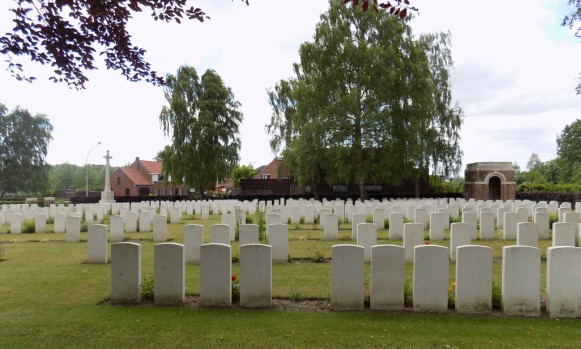
Ernest Arthur Bailey is buried in La Brique Military Cemetery No.2, plot I grave O.38, in the West-Vlaanderen (West Flanders)
region of Belgium.


La Brique is a small hamlet named from an old brick works that used to stand nearby before the First World War.

La Brique Cemetery No.2, designed by Sir Reginald Blomfield, was begun in February 1915 and used until March 1918.
The original cemetery consisted of 383 burials laid out in 25 irregular rows in Plot I. After the Armistice, graves were brought in
from the battlefields to create Plot II and extend the original plot.

There are now 840 Commonwealth servicemen of the First World War buried or commemorated in this cemetery. 400 of the
burials are unidentified, but special memorials commemorate four casualties known or believed to be buried among them.